Welcome back to Decision Point.
This is the first in a new series of development diaries looking more closely at the core mechanics of the game. In the previous diaries, I introduced the overall direction of Decision Point: a tactical wargame built around NATO doctrine, real-world terrain, AI subordinate commanders, and Decision Points that allow the player to react when the situation changes.
This diary focuses on the central gameplay loop:
At its core, Decision Point is intended to provide a realistic portrayal of modern command and control. The player issues intent to subordinate formations using NATO-style task verbs and control measures. Those subordinates then execute the plan within the constraints they have been given.
The player’s role is therefore to command through the chain of command, deciding how much detail is appropriate for the situation. A player can issue broad orders to a company or battlegroup and allow subordinate commanders to work out the details, or they can drill down to platoons, sections, and even individual squads, refining routes, waypoints, and tasks as required.
The key distinction is not the amount of planning detail. It is that once orders are issued and execution begins, formations carry them out independently until the next opportunity to intervene.
Intent, Task Verbs, and Control Measures
Modern command and control is based on communicating intent. A commander does not simply give every subordinate a sequence of movement instructions. They define what needs to be achieved, why it matters, and the framework within which subordinate commanders should act.
In Decision Point, this is represented through orders built around NATO-style task verbs.
When the player selects an intent, they are choosing the purpose of the order through a doctrinal task such as:
-
Destroy — remove the enemy’s combat capability.
-
Secure — take and hold a position.
-
Screen — observe, provide warning, and avoid decisive engagement.
-
Support by Fire — suppress or fix the enemy so another element can manoeuvre.
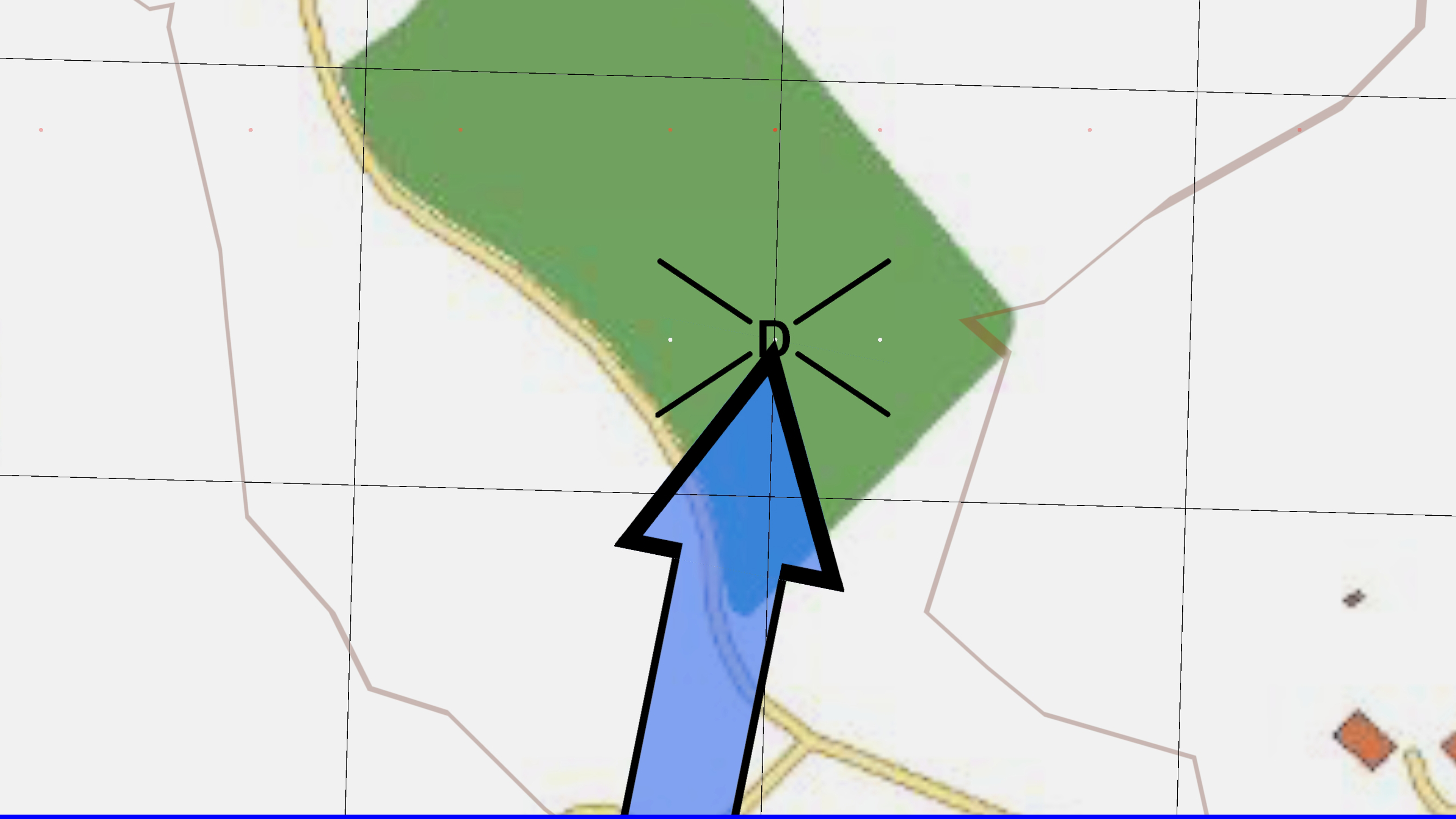
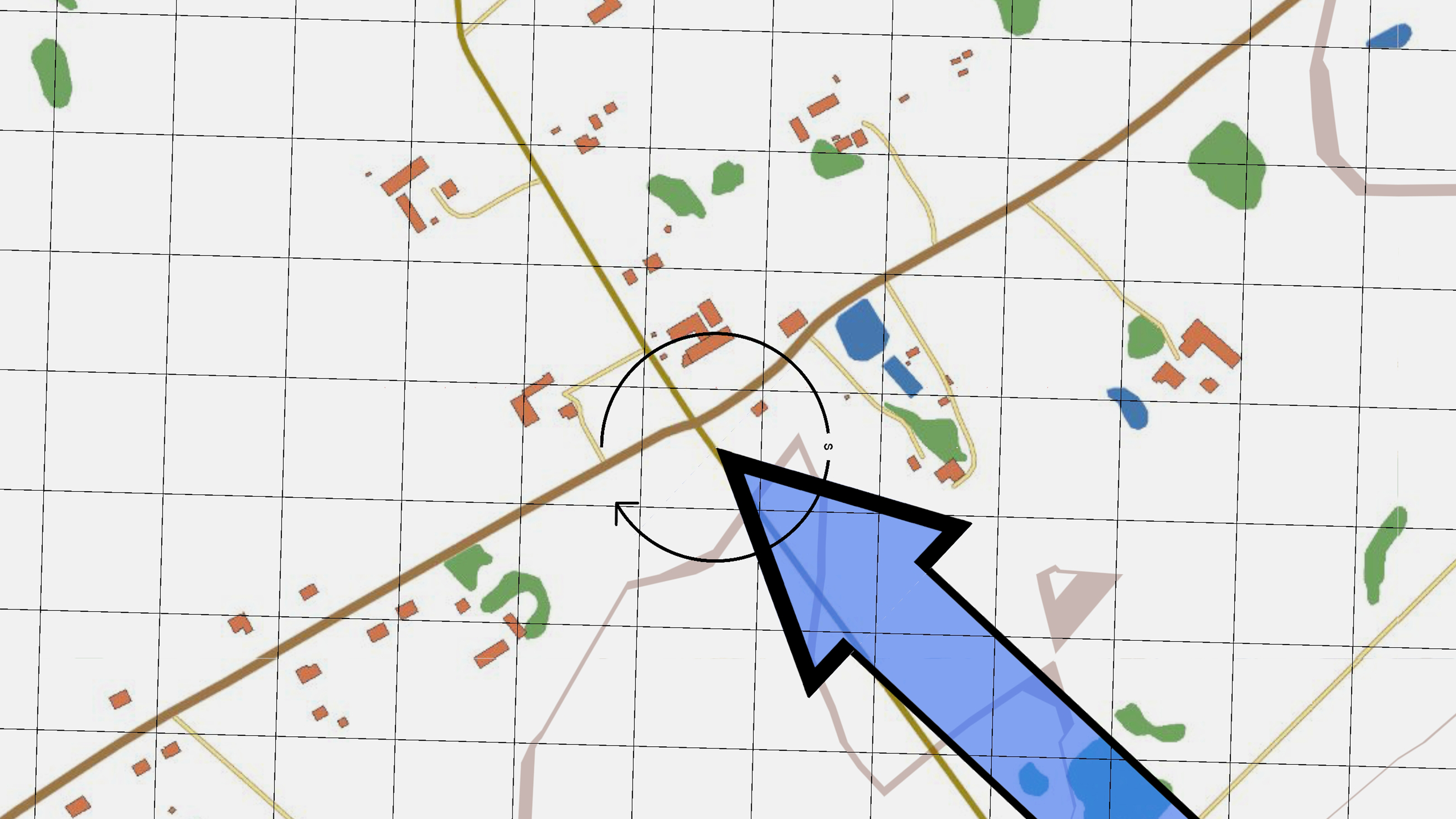
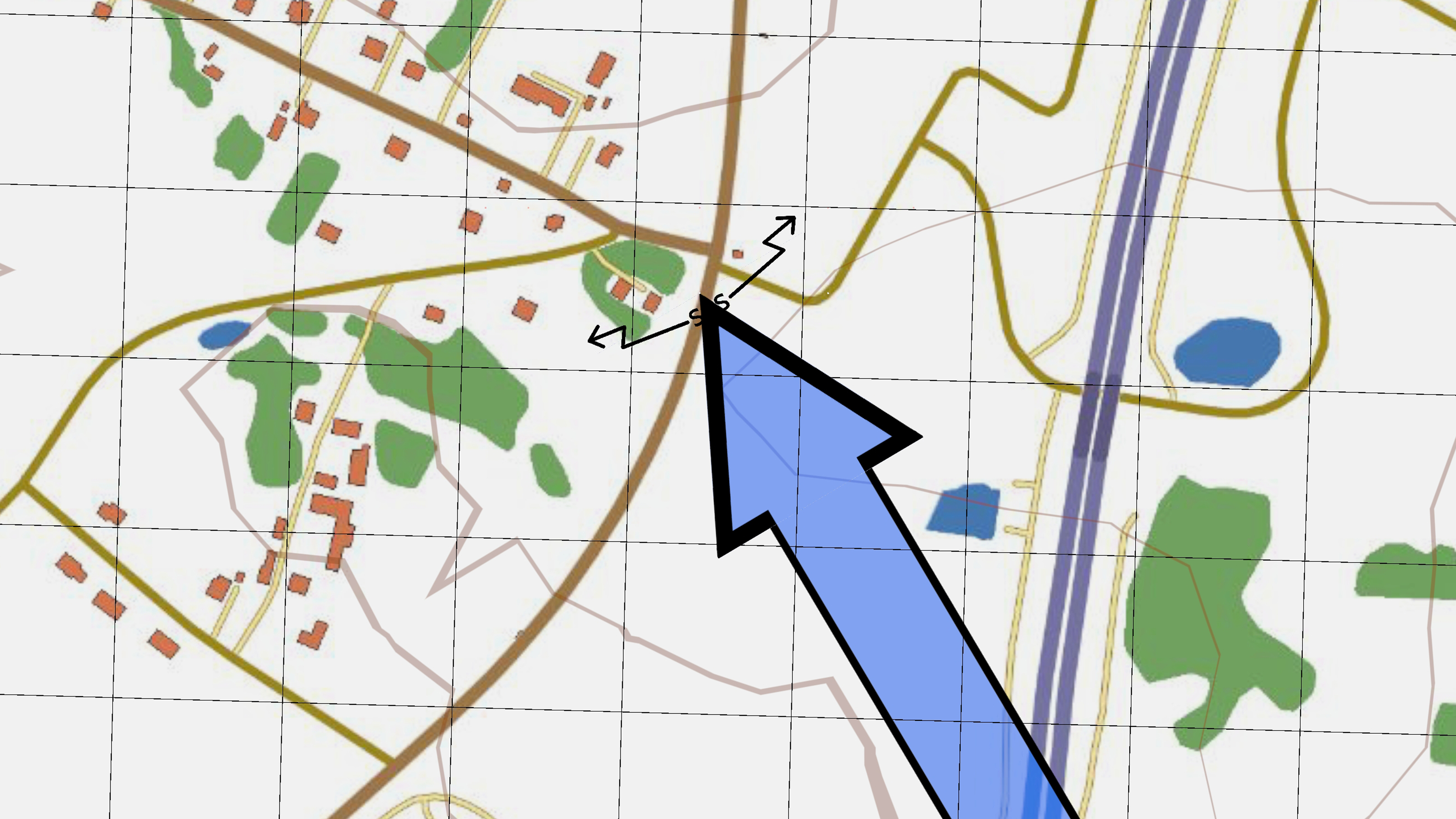
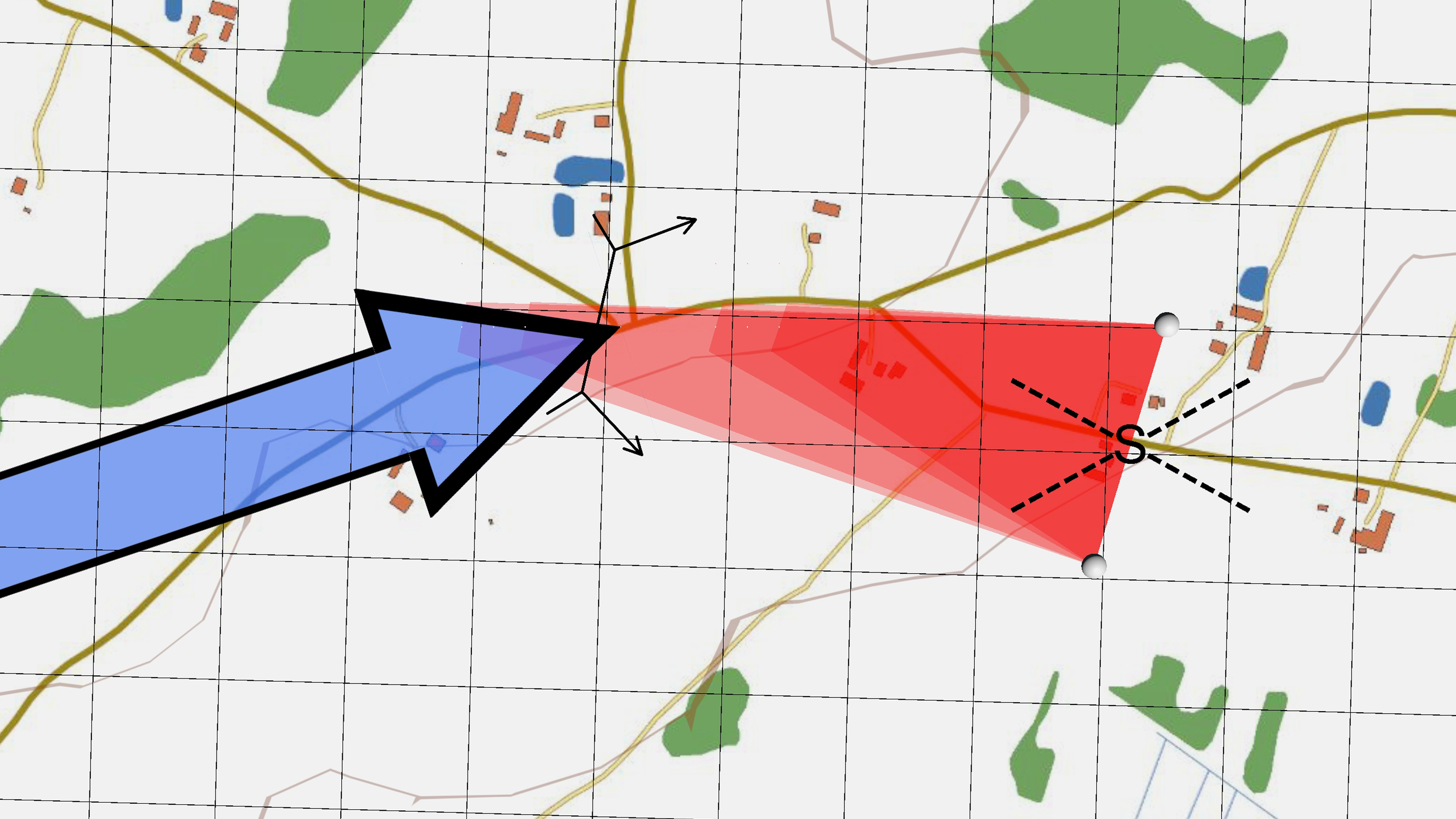
Each of these task verbs produces a different type of order. A Destroy order is not just a movement arrow with a different label. It creates a structure suited to that task, including the relevant control measures that shape how the formation will carry it out.
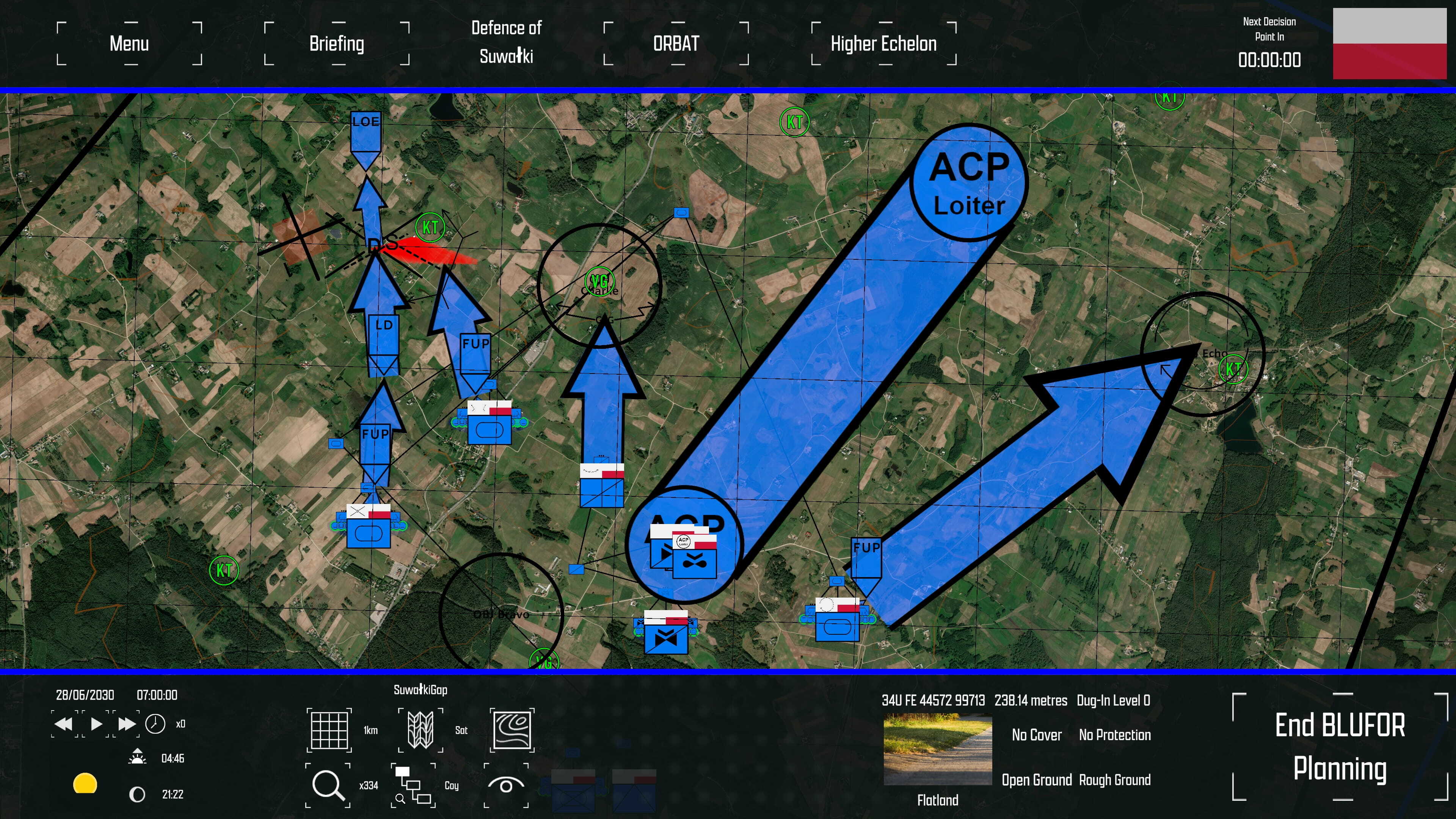
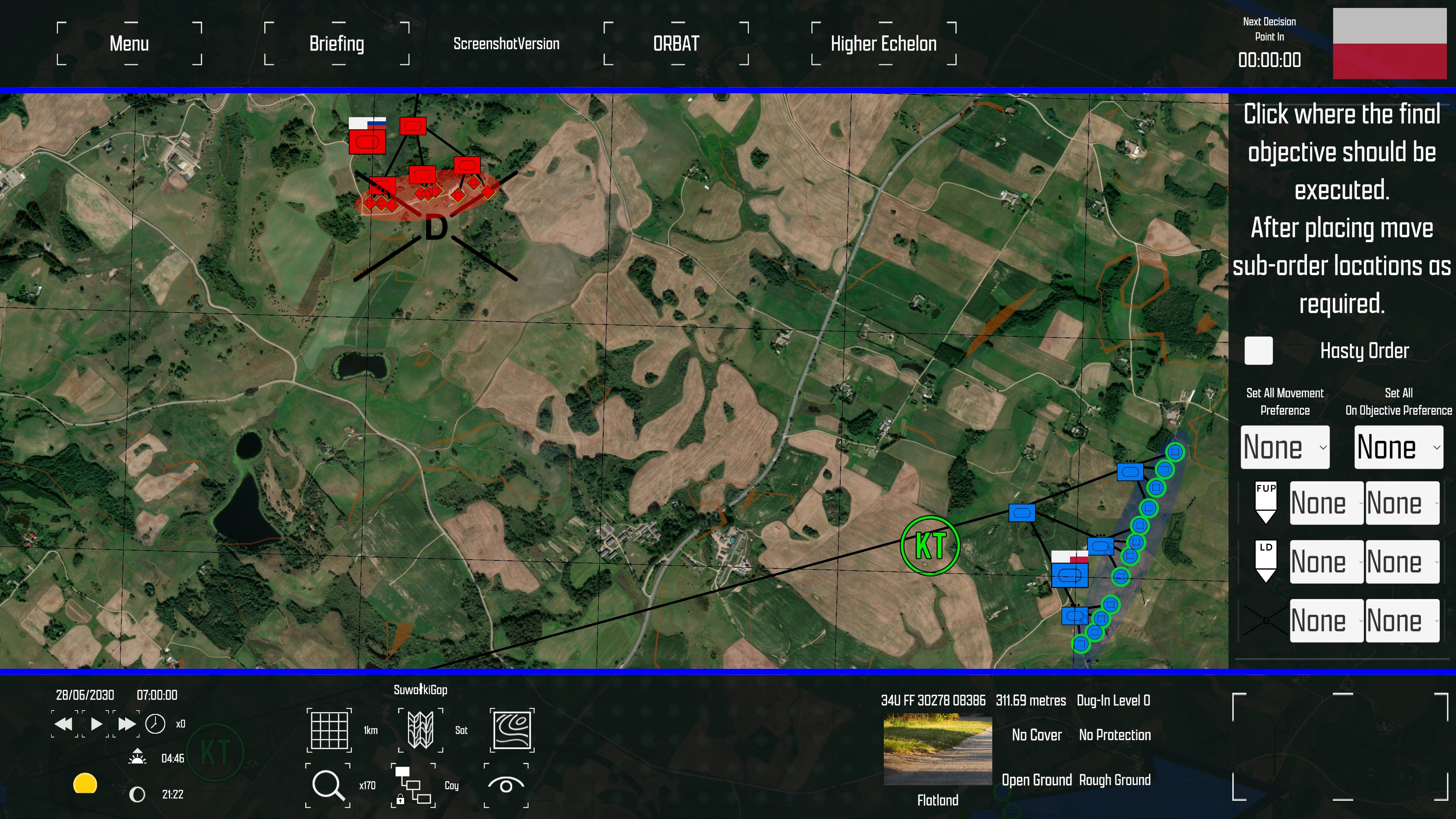
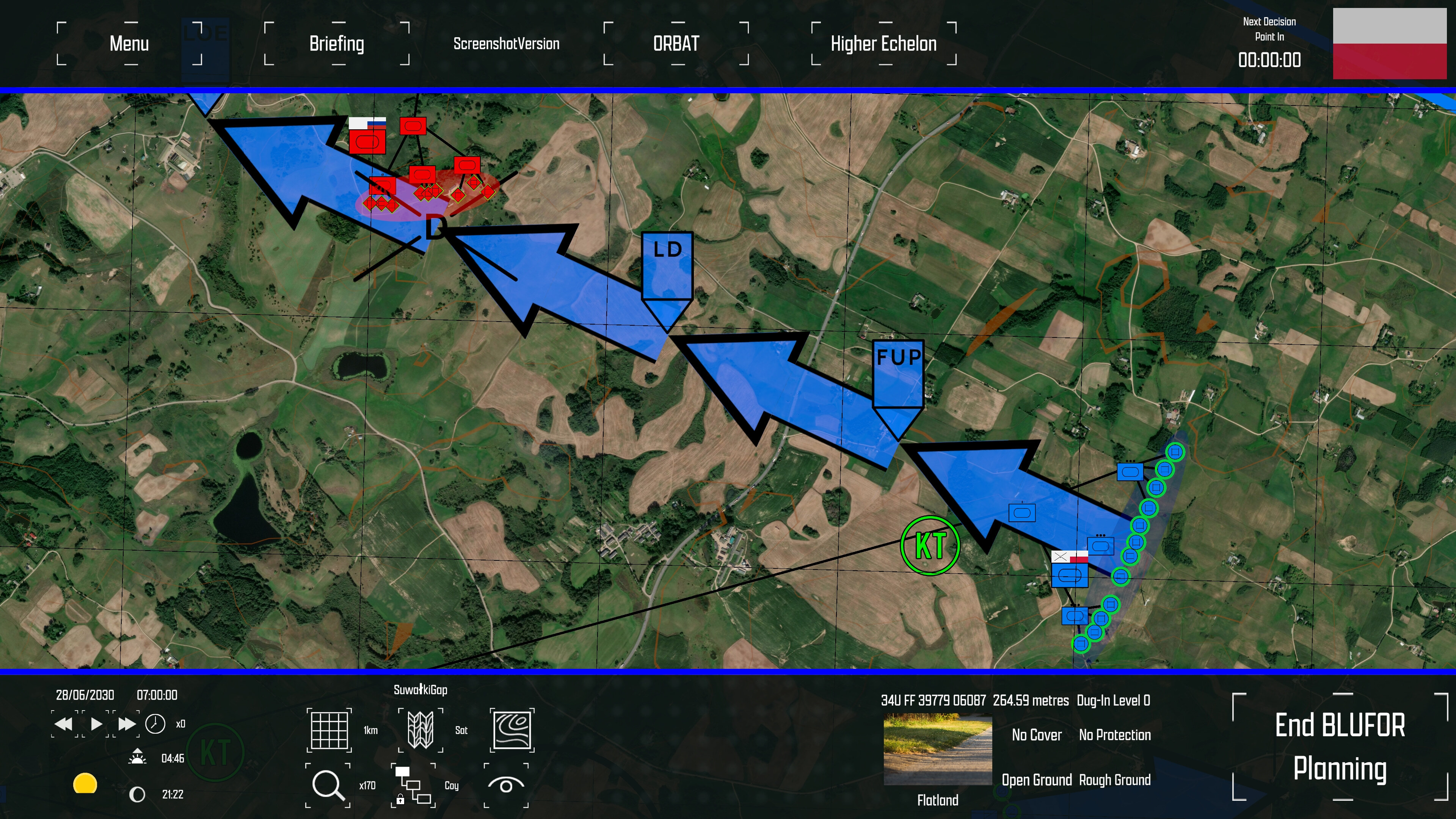
Control measures are the planning graphics and reference points that define the framework of the order. These can include objectives, form-up points, lines of departure, routes, boundaries, and other tactical graphics. The player can adjust these measures on the map before execution begins, allowing the order to be refined without turning the game into a constant click-by-click movement system.
Checkpoints are slightly different. They can be added to any manoeuvre, allowing the player to force a formation through specific locations when the exact route matters.
The visual language of these tasks and graphics is based on NATO military symbology and AAP-6C-style terminology. The aim is not just to make the map look authentic, but to make the player think like a commander. You are not simply moving icons. You are building a structured order and then trusting subordinate formations to execute it.
Giving Orders Through the Chain of Command
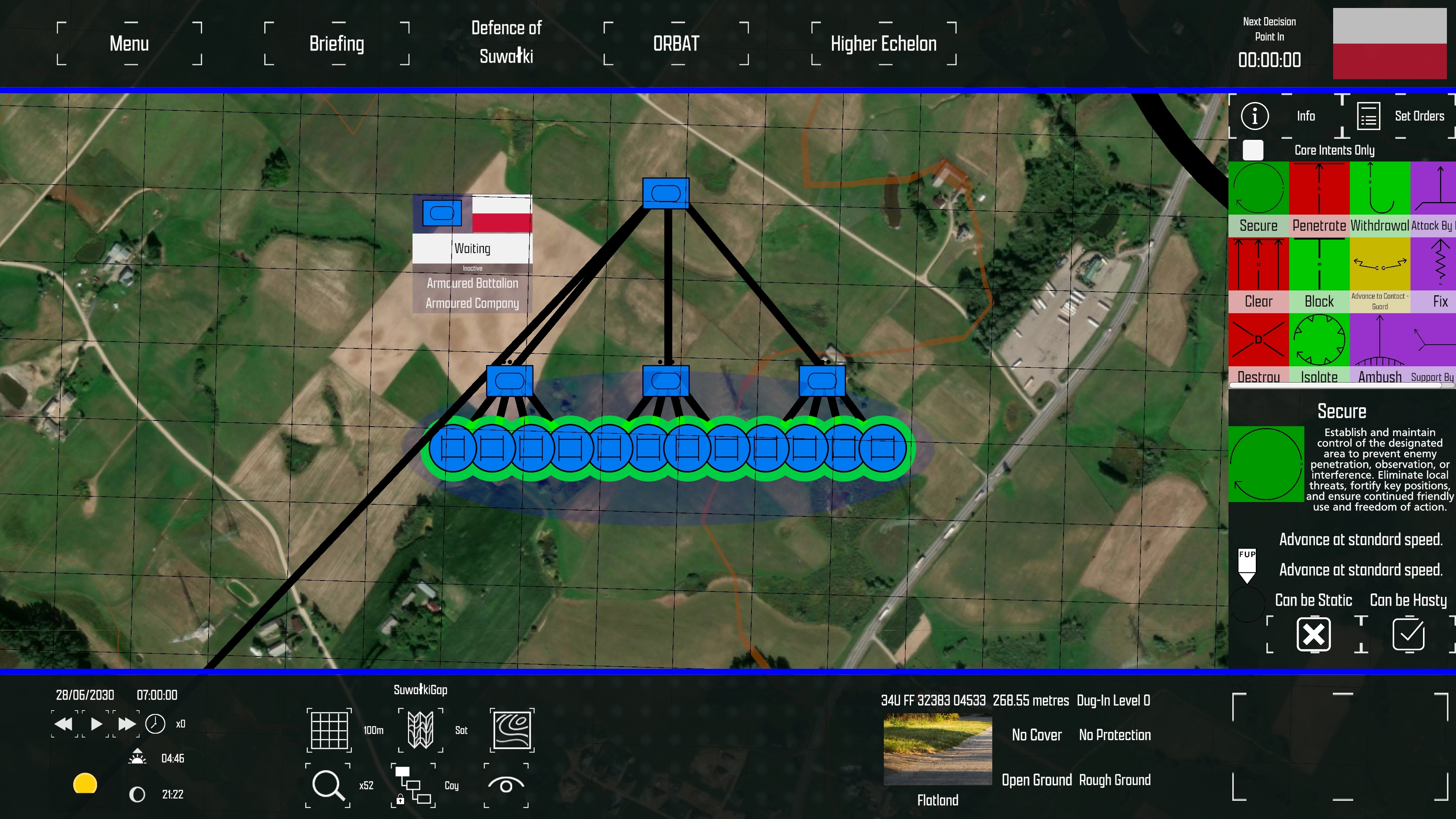
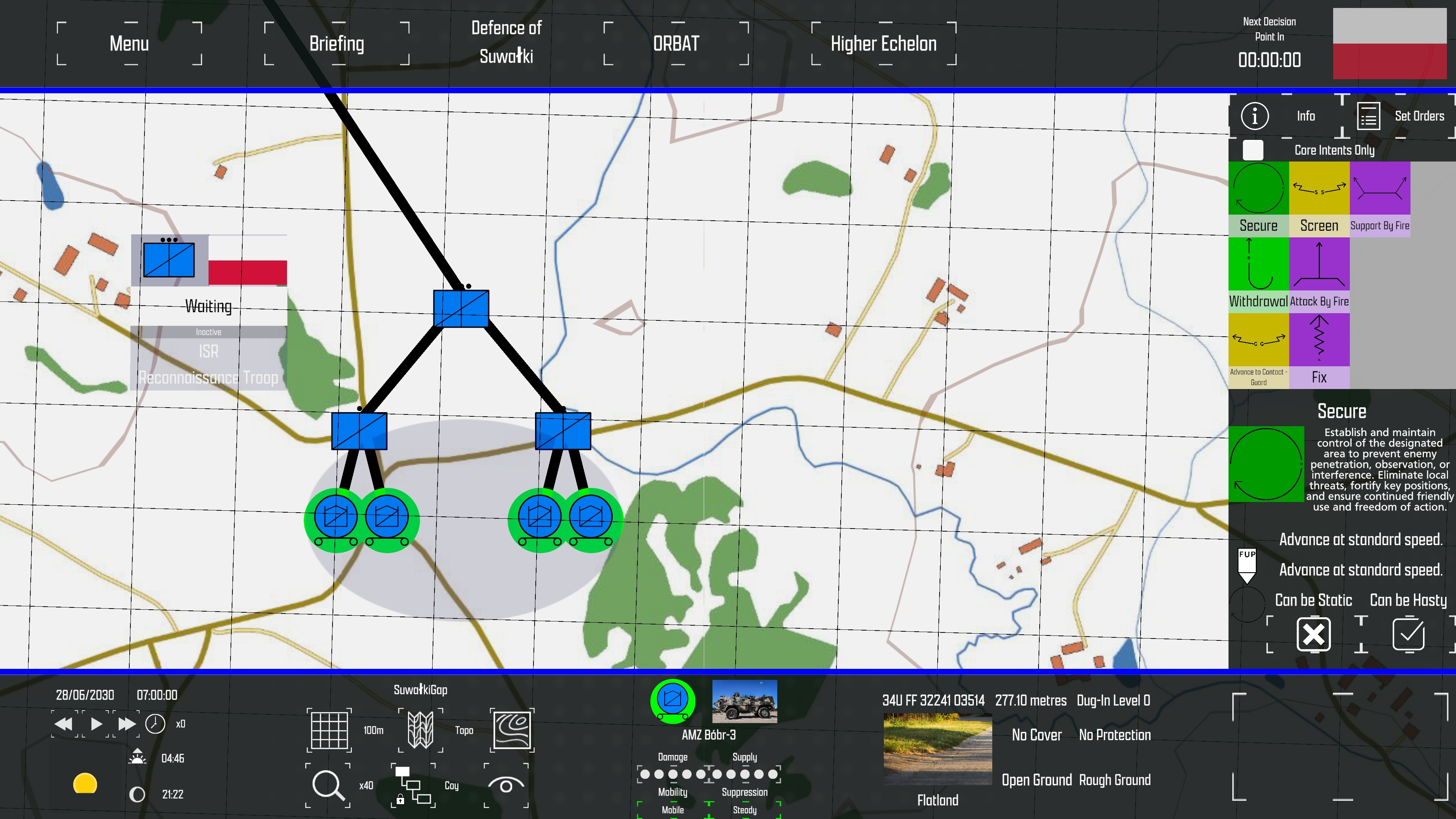
Forces in Decision Point are organised into hierarchical formations. A battlegroup is broken down into companies, platoons, and individual vehicles or infantry sections.
Orders can be issued at different levels of command. A company can be given a broad task, and its subordinate platoons will execute that task as part of the wider plan. If more detail is required, the player can drill down and refine the subordinate elements directly.
This allows the player to choose the level of planning appropriate to the situation. A simple movement may only need a broad company-level order. A deliberate assault may require the player to adjust platoon tasks, routes, and control measures in detail.
Different formations also have different appropriate tasks. A reconnaissance troop equipped with Ajax will have tasks focused around reconnaissance, screening, and supporting fires. An armoured troop equipped with Challenger 3 will be better suited to assaulting, destroying, or dominating enemy armour.
The available intents therefore reflect the role, equipment, and command level of the formation being commanded.
Creating an Order
In practice, creating an order begins by selecting a formation and choosing one of the intents available to it. The available options depend on the formation’s role, equipment, and level of command.
Once selected, the player places the order onto the map, and the formation commander generates the basic structure of the order:
The control measures matter. A formation may use a form-up point to regain cohesion before moving forward. It may cross a line of departure to begin an assault, switching to a more aggressive movement style. It may move through checkpoints to follow a specific axis or avoid dangerous terrain.
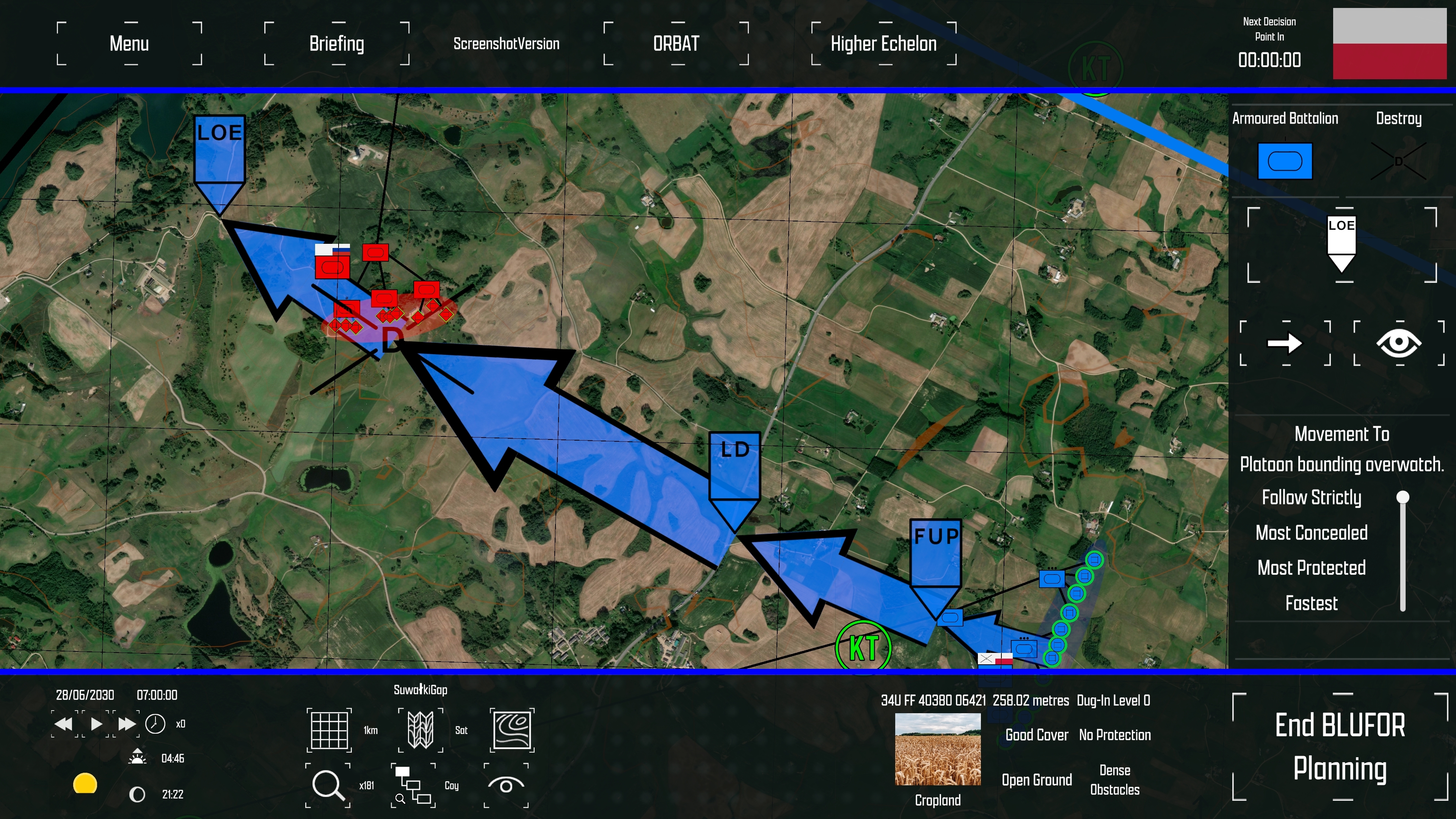
Each order can also carry a movement style. A formation may advance normally, advance to contact, move cautiously, bound forward, or conduct an assault. These behaviours affect how the formation moves and how it reacts if it encounters the enemy.
The generated plan is a starting point. The player can adjust the route, move control measures, add checkpoints, and refine the order before execution begins.
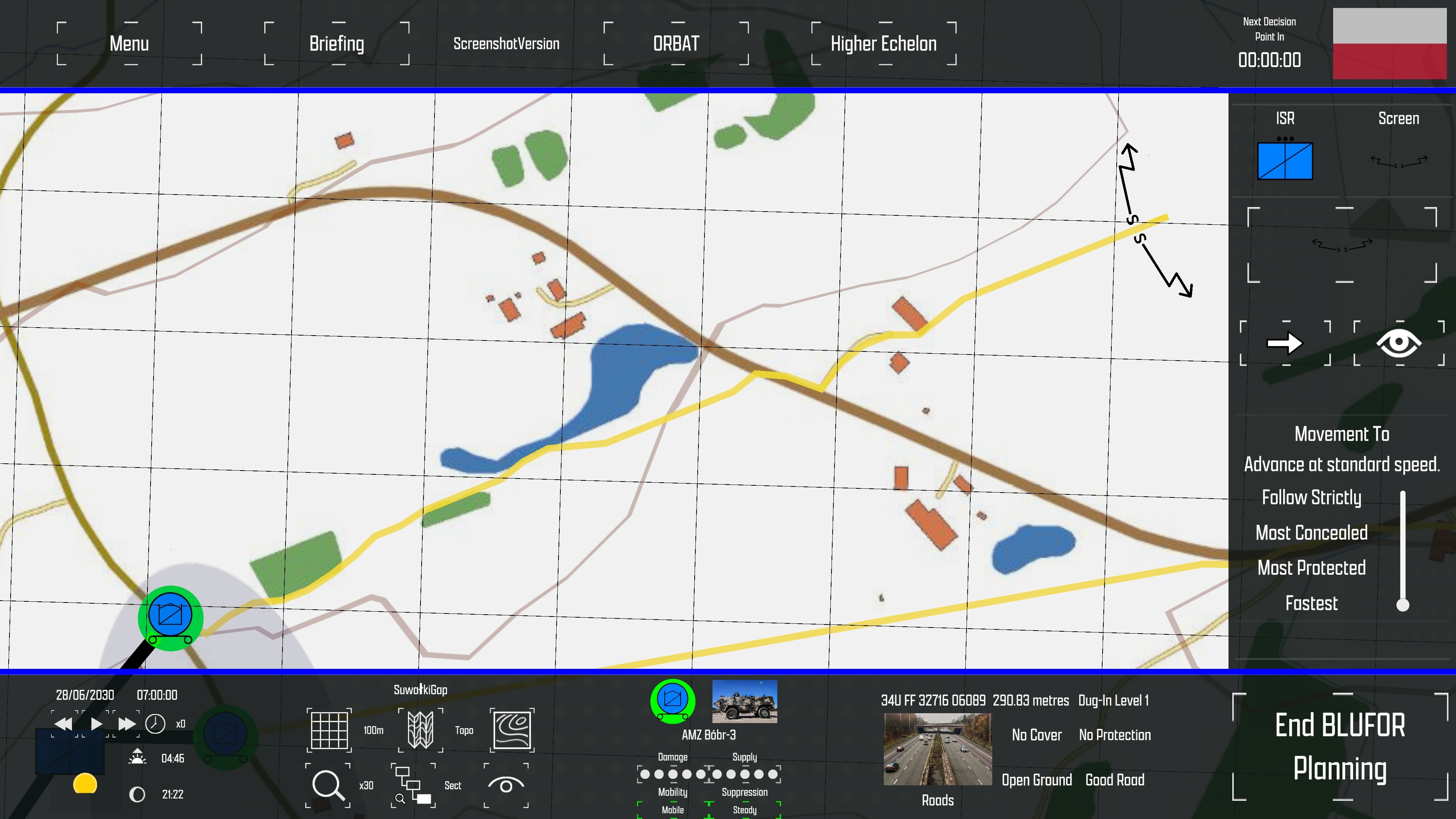
Routes, Terrain, and Movement Guidance
Because formations execute independently once the plan begins, route planning is an important part of command.
A formation can be told to follow a direct route, or to plan its movement according to different priorities:
This allows the player to describe the type of movement they want without plotting every minor turn.
A fast route may favour roads and open ground. A concealed route may use forests, dead ground, and covered approaches. A protected route may try to avoid exposed positions where possible.
Players can also add checkpoints to force a formation through specific locations. This is useful when the route itself is tactically important, such as passing through a defile, avoiding a ridgeline, or coordinating movement along a particular axis.
Refining Orders at Lower Levels
A high-level order can be refined by drilling down into subordinate formations.
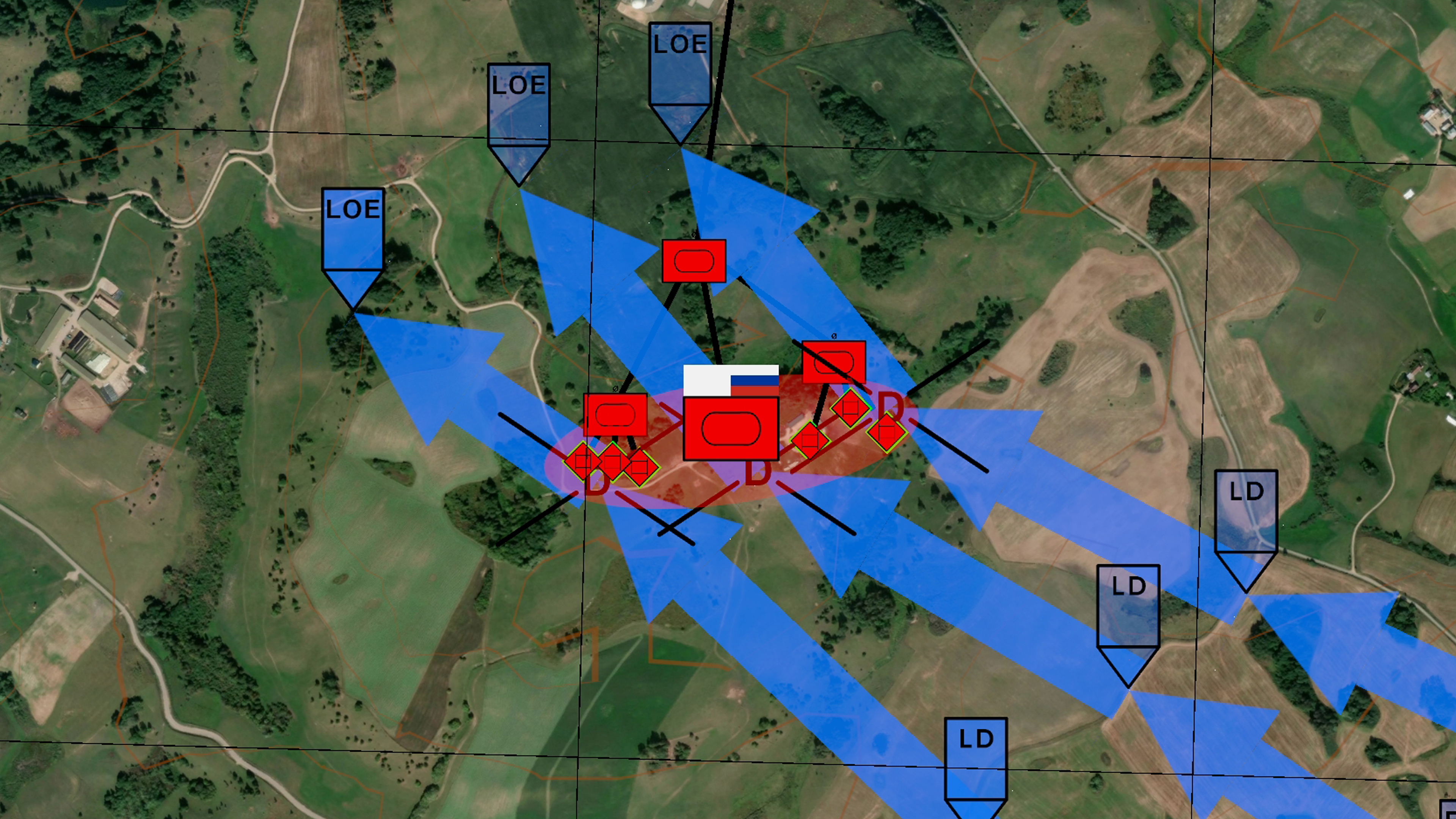
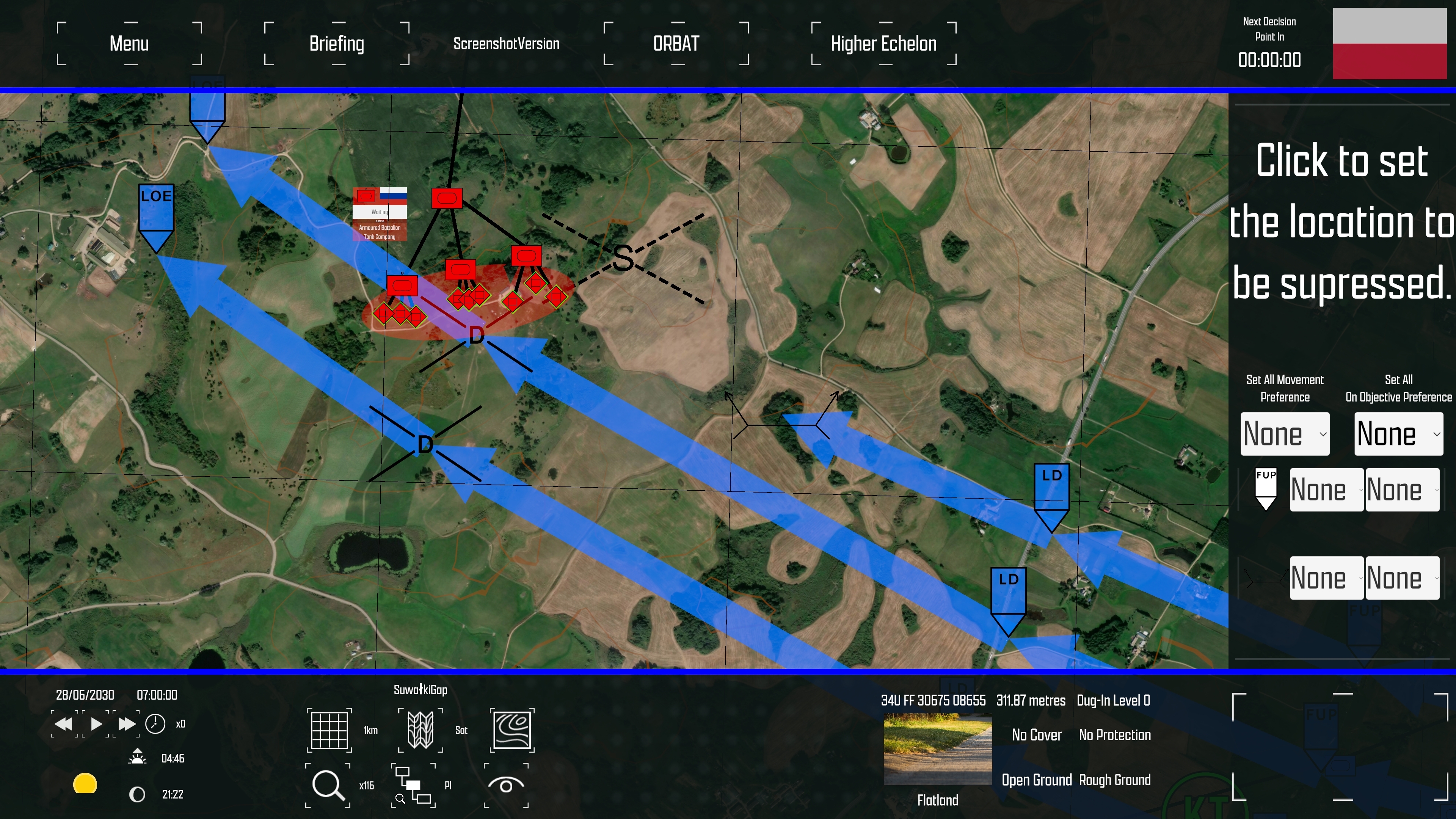
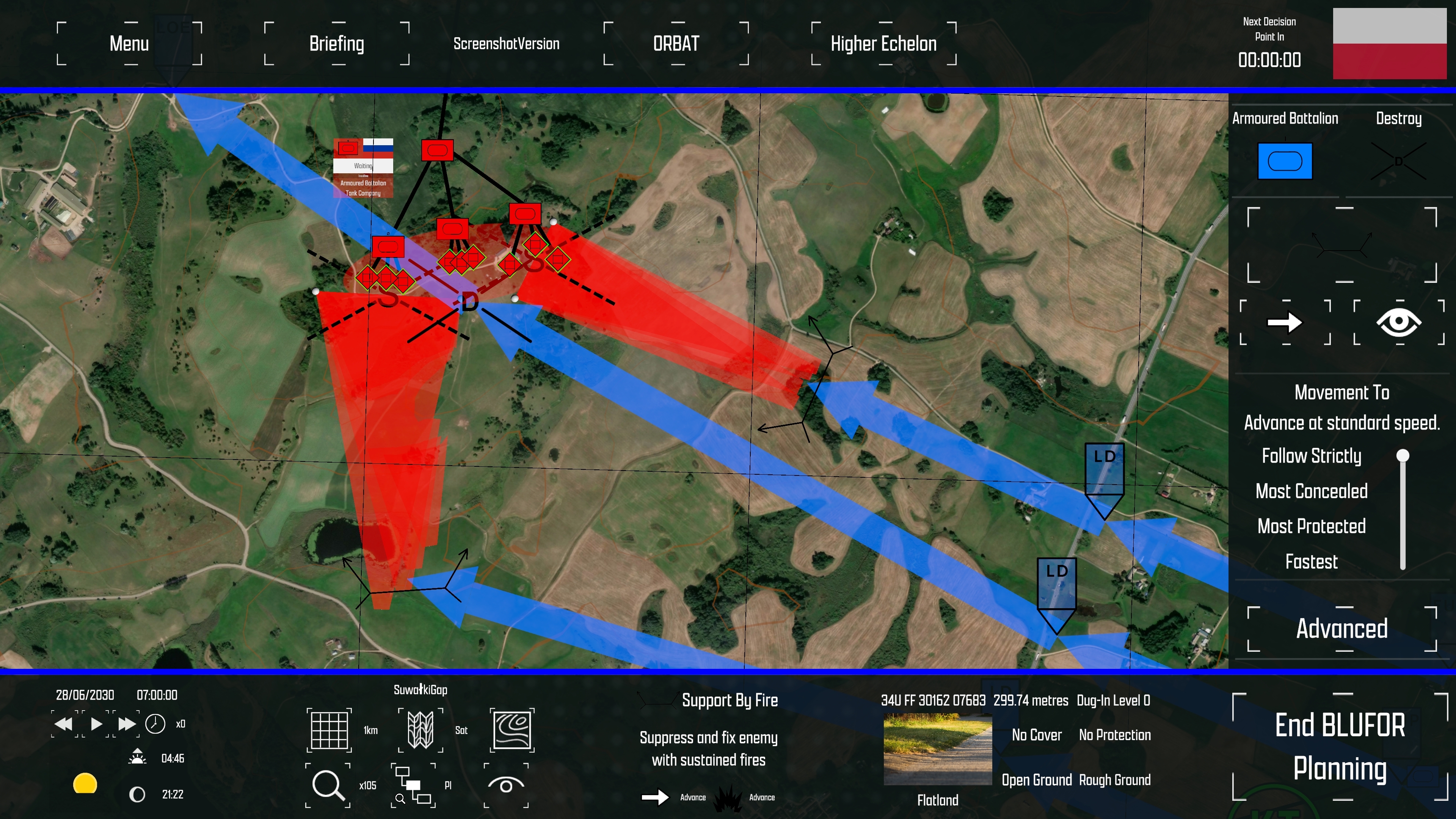
For example, a player may initially order a company to destroy an enemy position. By opening the platoons underneath that company, the player can turn that broad order into a more detailed plan:
-
one platoon assaults the objective
-
one platoon conducts a support by fire
-
one platoon blocks a flank or secures a likely enemy counter-attack route.
The company still has a clear overall purpose, but its subordinate formations now have different roles within that plan.
This is where the level of detail is up to the player. In some situations, the broad order is enough. In others, the player may want to carefully position each platoon, adjust its movement path, and assign supporting tasks.
Static and Hasty Orders
Not every order requires a full movement plan.
Some orders can be issued as static orders. These are used when a formation is already in position and the player wants it to execute an intent from where it stands. This is useful for defensive tasks, supporting fires, overwatch, or holding key terrain.
Other orders can be issued as hasty orders. These allow a formation to react quickly without a full set of control measures. A hasty order is faster to create and useful in urgent situations, but it may come with reduced cohesion or less deliberate preparation.
This creates a trade-off between preparation and speed. Sometimes the commander has time to build a structured plan. Sometimes the battlefield requires an immediate response.
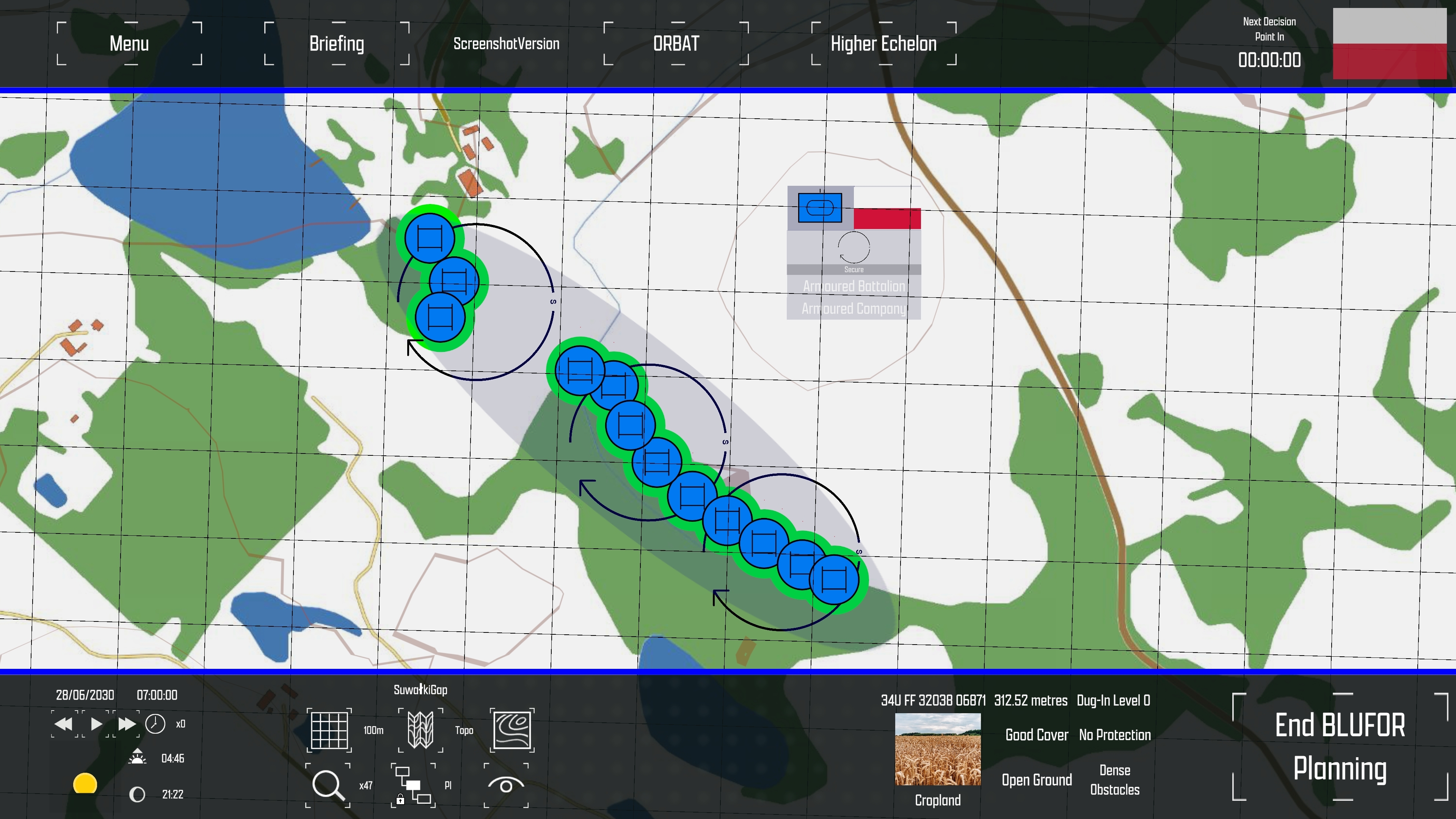
Execution
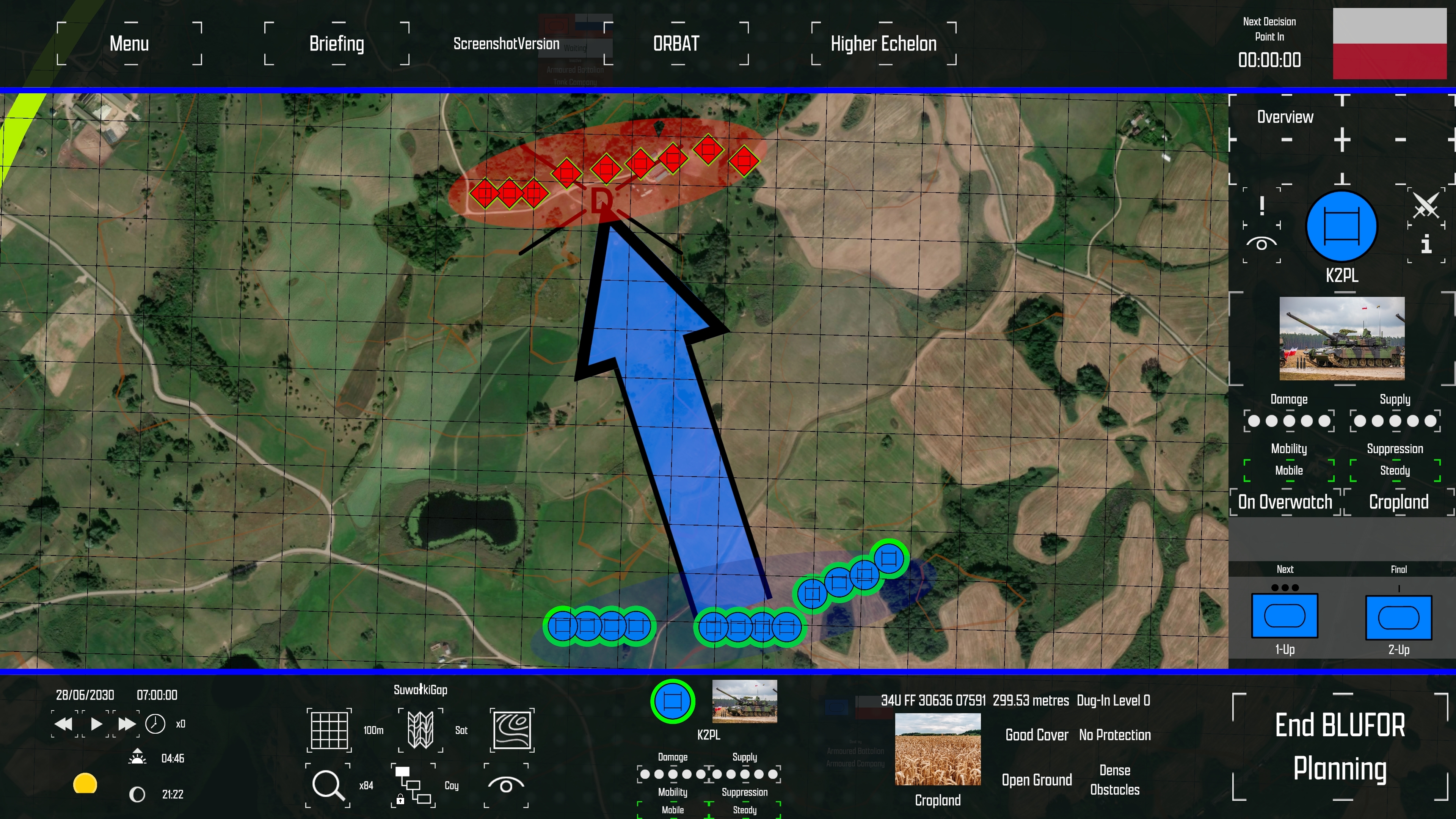
Once orders are complete, the execution phase begins.
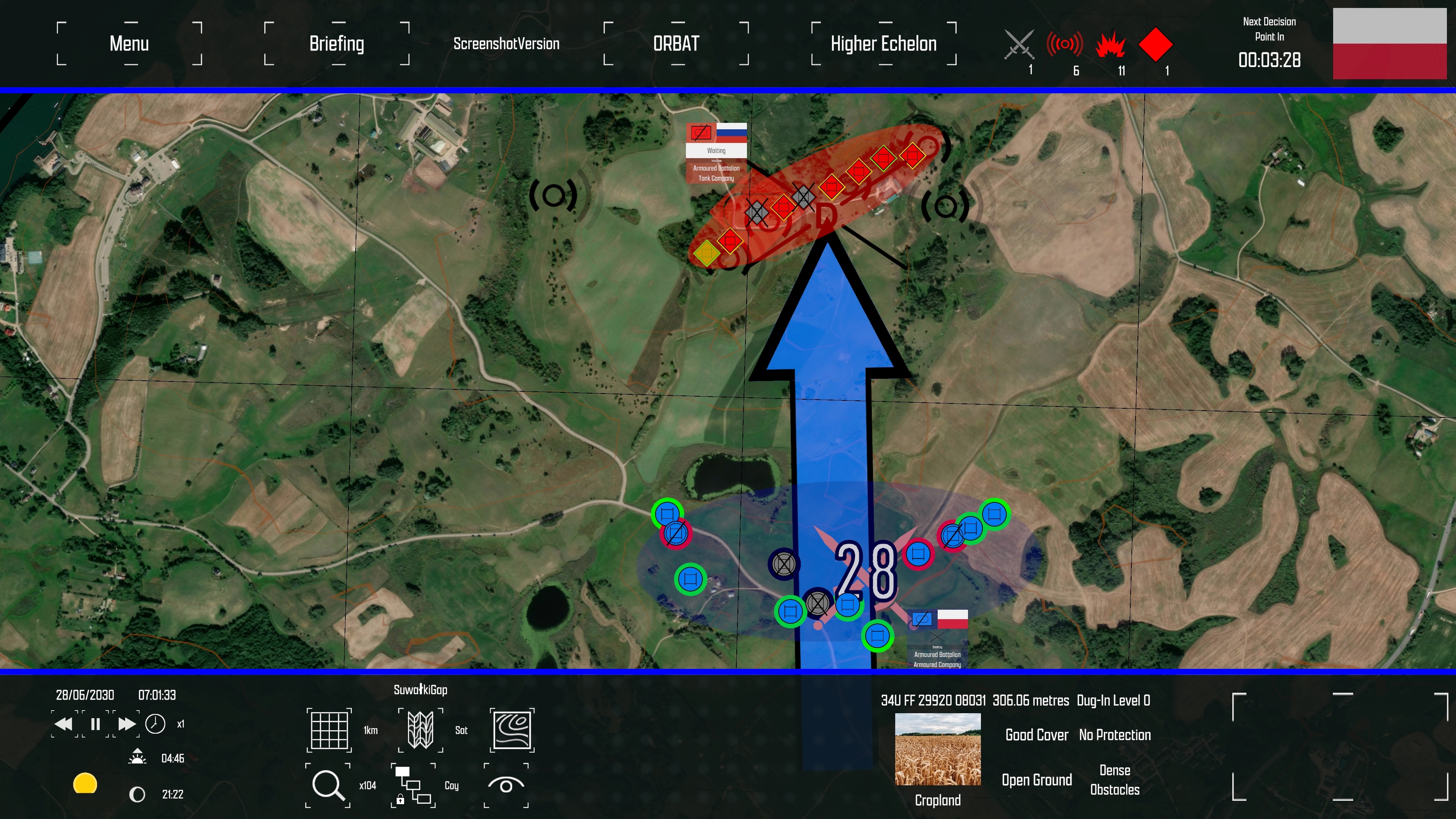
Both sides’ forces begin carrying out their plans independently. The player observes as formations move, halt, react to terrain, make contact, and engage according to their assigned intent and movement behaviour.
This is where the quality of the plan is tested:
-
Was the route appropriate?
-
Were the control measures well placed?
-
Did the formation maintain cohesion?
-
Was the intent suited to the situation?
-
Has the enemy acted in an unexpected way?
When the situation is quiet, time can be accelerated. This allows longer movements to play out without forcing the player to watch every moment in real time.
Planning cycles in Decision Point are not based on arbitrary turn lengths. The player replans when something significant happens.
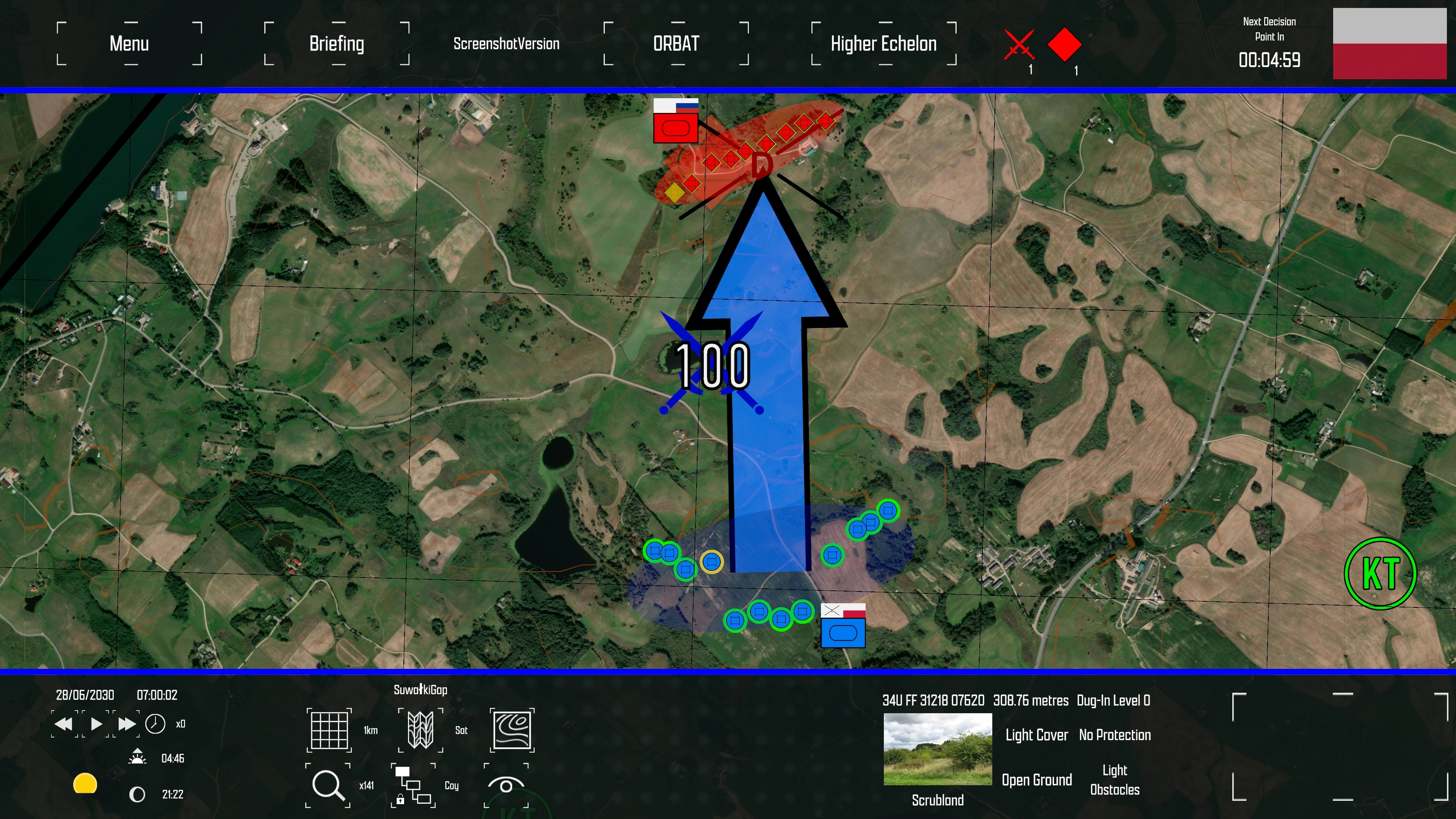
Decision Points
A Decision Point occurs when the tactical situation changes in a meaningful way.
This may happen when a formation:
These events indicate that the plan has met reality and that the tactical situation has changed in a way that may require the commander to reassess and adapt.
When this happens, a Decision Point timer begins. This represents the delay involved in reports reaching the commander, the situation being understood, and new orders being prepared and distributed.
Once the timer reaches zero, both players return to planning. The player can issue new intents, adjust control measures, change routes, or allow existing orders to continue.
This creates the central rhythm of the game:
The aim is to represent command as a process of planning, delegation, friction, and adjustment. The player is not reacting instantly to every shot, but they are also not trapped in a fixed turn structure while the battle moves beyond their control.
Looking Ahead
This diary has focused on the command-and-control structure at the heart of Decision Point: intent-based orders, NATO-style task verbs, control measures, subordinate execution, and Decision Points.
Future diaries will look at other systems that build on this foundation, including combat, indirect fires, drones, infantry dismounts, airpower, terrain interpretation, and the Battle Balance indicator.
As always, I would be very interested to hear what you think.
Decision Point is developed by NCED Wargames and published by Matrix Games and is planned for release in Q1 2027.