The AI opponent in Twilight in the East should be quite a lot better than the one you were facing in the previous game - Decisive Campaigns: Ardennes Offensive. I have spent probably months of work on improving it. Step by step. Don’t expect “deep blue level” mastery of the rules, but it should be much more of a challenge, especially when the AI difficulty is moved upwards from “normal” to, for example, “challenging” or “hard”.
As a benchmark test, I ran the scenario St Vith (from Ardennes) with the new Twilight AI, and we can see the Germans are doing better with the new AI. A bit deeper penetration especially with more force, it also lost the same number of Axis troops as the Ardennes AI, but it killed double the number of enemy allied troops. But more importantly its troops are massing towards the most important Victory Point that is St Vith.
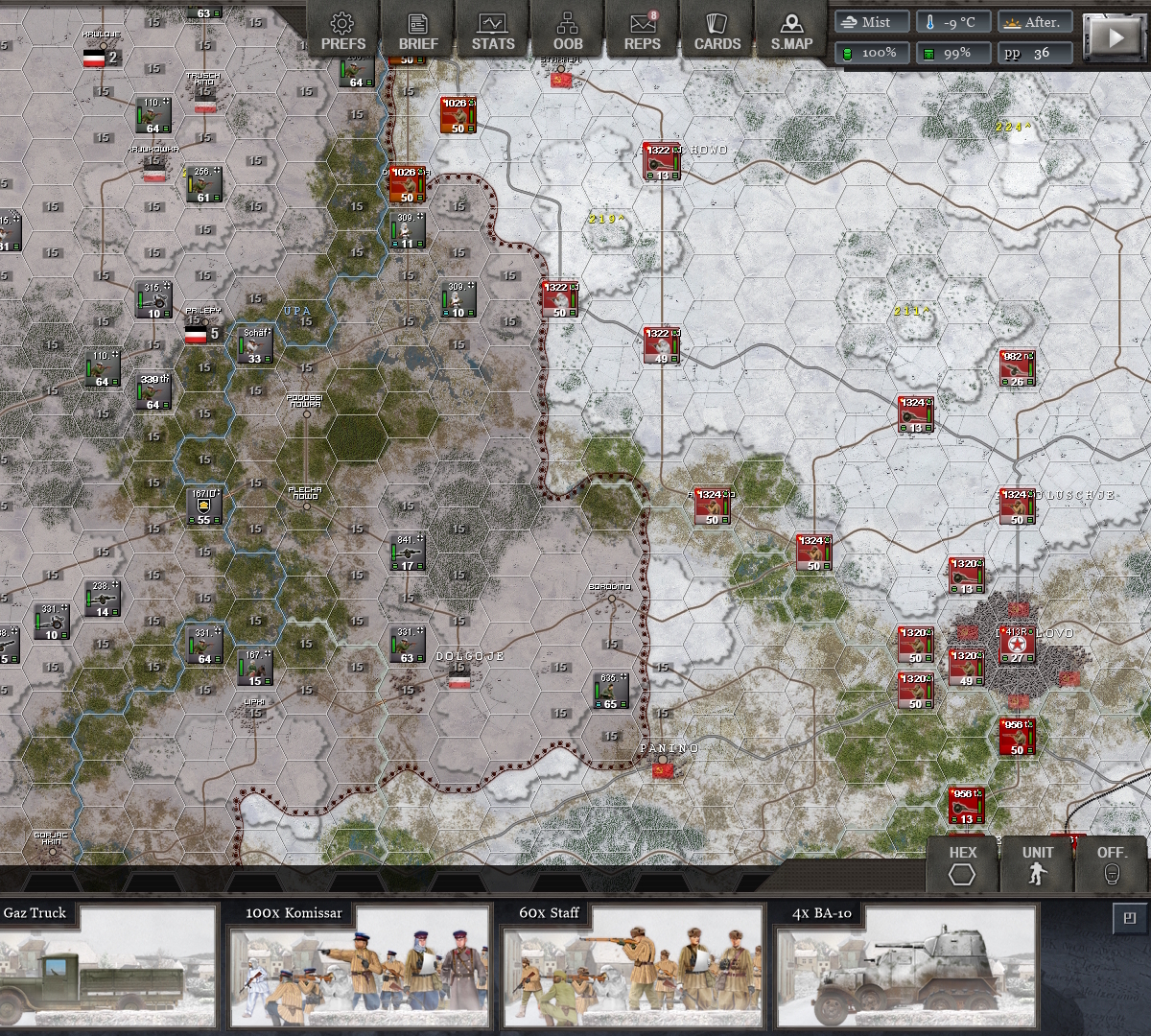
Here we see the algorithms mostly running on the old AI in the Tula scenario.
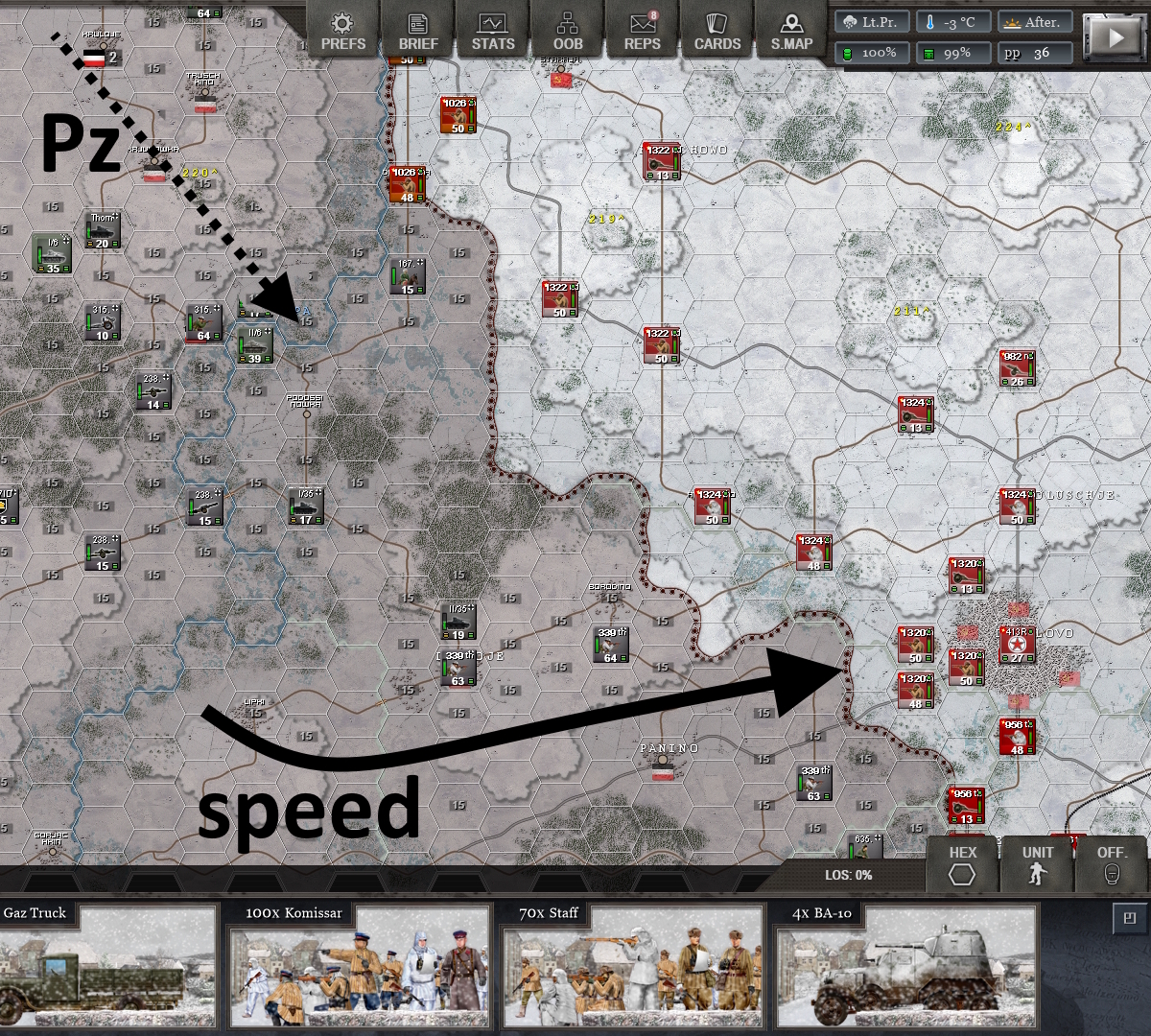
And here on the new Twilight AI. Note the 2 key differences is the German AI is advancing faster and with more units and the German AI has diverted its panzers from frontal attack on the very well-protected and defended Tula to the south, in the hope of a breakthrough there.
The reason why it is better is, first of all, due to a lot of endless fine tunings. Much of the AI’s strength depends on its internal scoring for a potential move. Getting that scoring to be of a higher quality was a big part of my work.
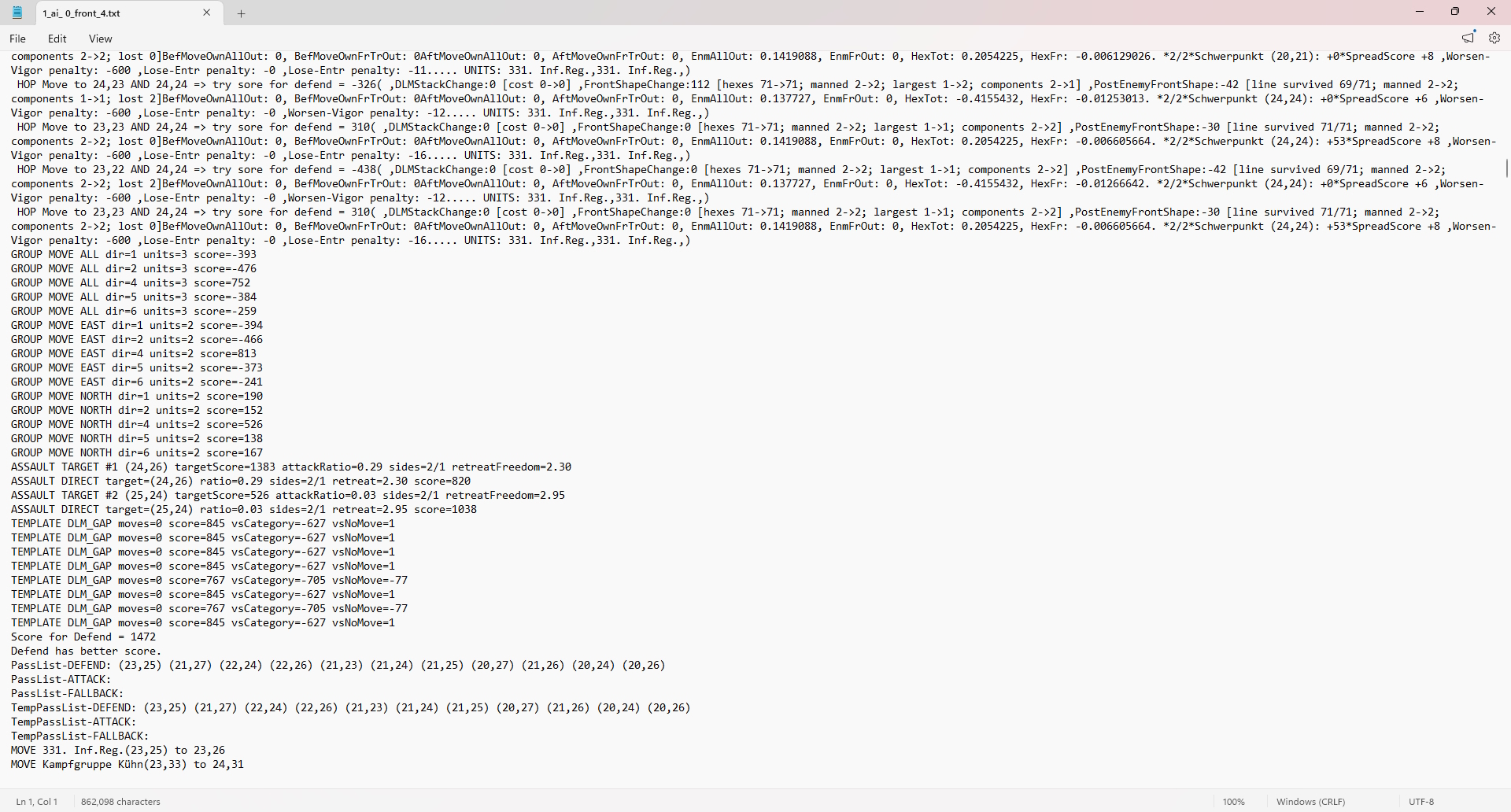 It's painstaking work, as you can see above, to analyze the AI logs. This had to be done for both the tactical and the operational level.
The second reason Twilight in the East AI is improved is because it is trying to find more interesting combinational moves. The algorithm is now actively checking out combined and structured moves. For example, it’s trying grouped moves where multiple units move together in the same direction, or hopping behaviour where one unit moves and another takes its place. The old Ardennes AI was much more focused on single-unit movement testing.
The third major reason why the AI is performing better is because it is actually faster and it can run more calculations due to using quite a bit of threaded calculations. That is a technical first for DC. Better late than never, right? It also means that the big scenarios can run in a more reasonable time against the AI, especially if using “FAST” AI speed.
And yes… after the hopefully successful release of Twilight in the East, we are looking forward to backporting Twilight in the East improvements to the Ardennes game. Give it some time, though.
Now we all know that with highly complex wargames, the AI will always remain slightly wanting against an expert player. The only real challenge, if you want to fight against cunning instead of material advantages, will be playing a human adversary.
With Twilight in the East, we are bringing back integrated PBEM++ using Slitherine’s (publisher) servers. This allows you to do matchmaking and play-by-email gaming right from within the game.
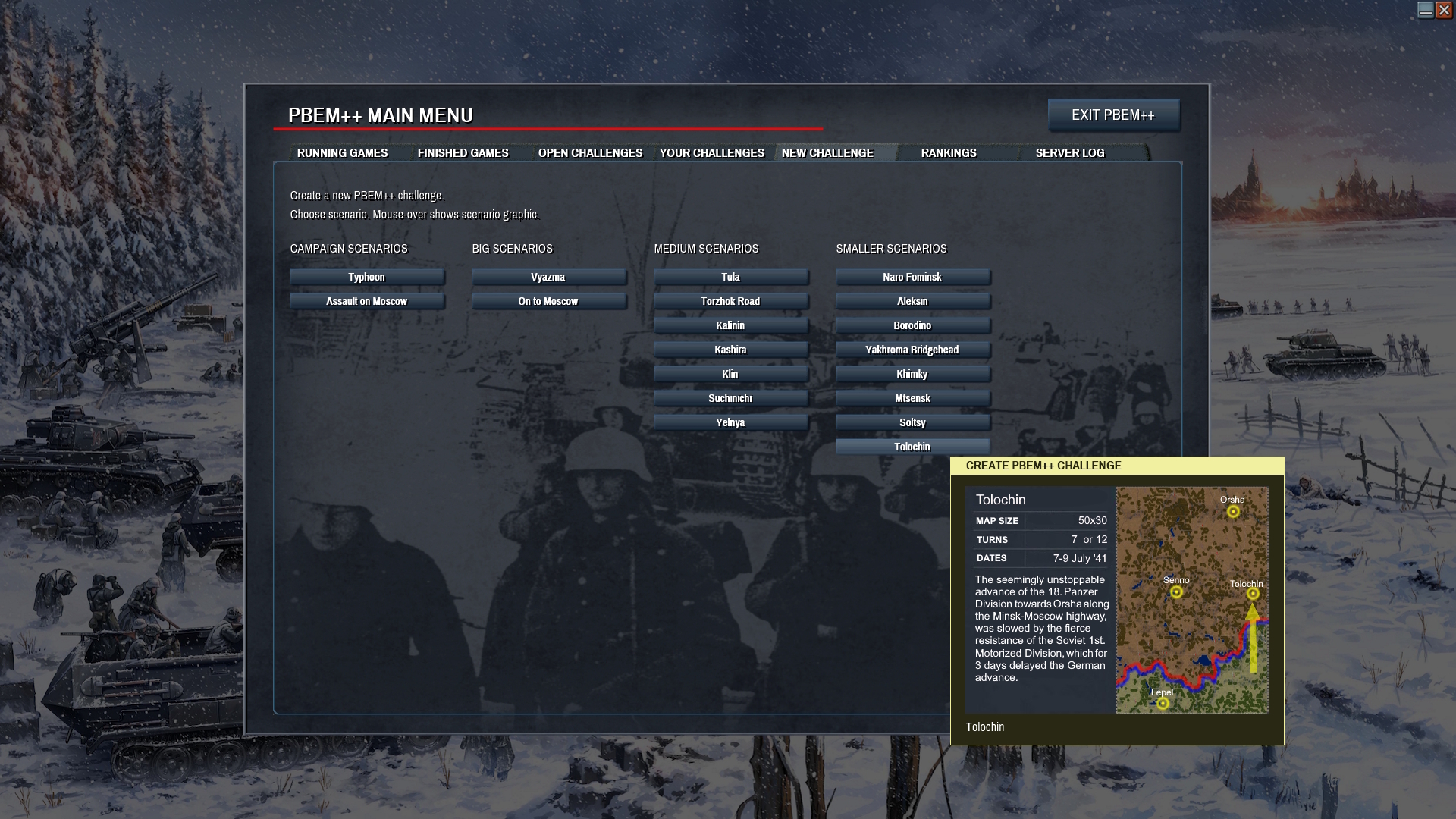 You can select any base scenario as a PBEM++ game, as you can see above.
The unique mix of operational and tactical gameplay in Twilight in the East allows each player to think at an operational scope, but also engage in detailed micro-management and smaller unit actions.
Sometimes, a small tactical detail decides the fate of an entire operation; at other times, the course of the operation determines the fate of countless smaller engagements.
This is ideal for competitive human play and brings the battles of 1941 truly alive.
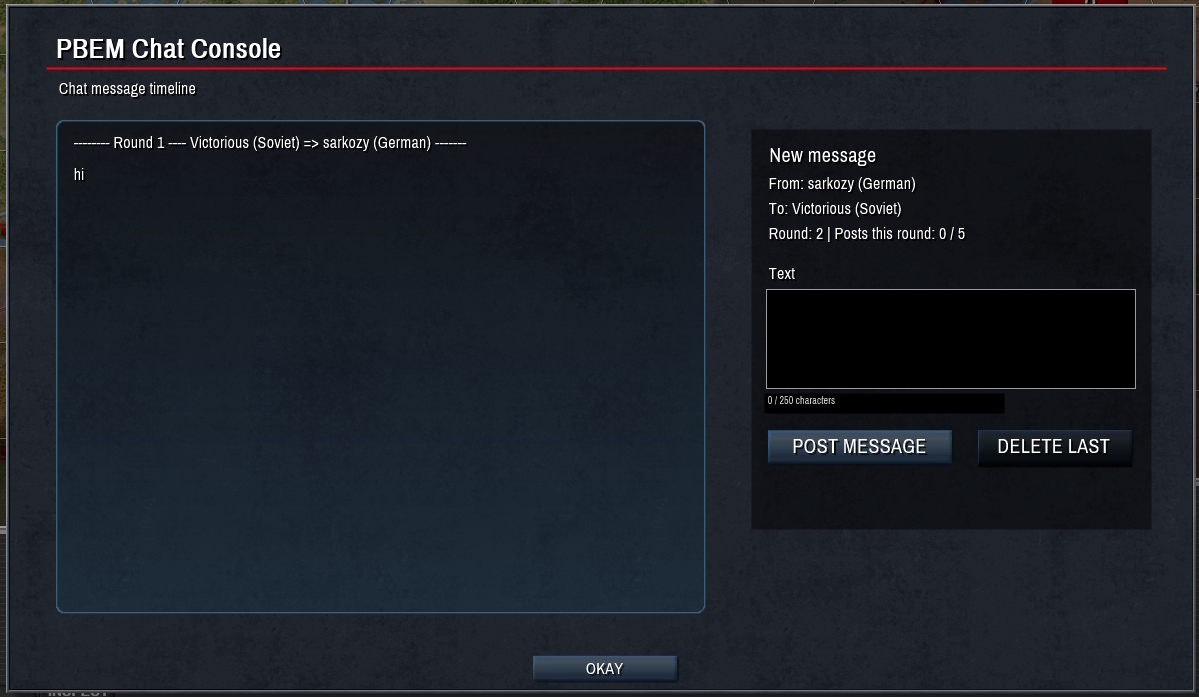
The PBEM++ mode comes with a simple but efficient chat system to engage your opponent with.
The strong AI fundamentals and the new PBEM++ should provide plenty of play opportunities. Combined with the already existing but extended DC editors, this should provide a rich system to play your Battalion-level eastern front games with.
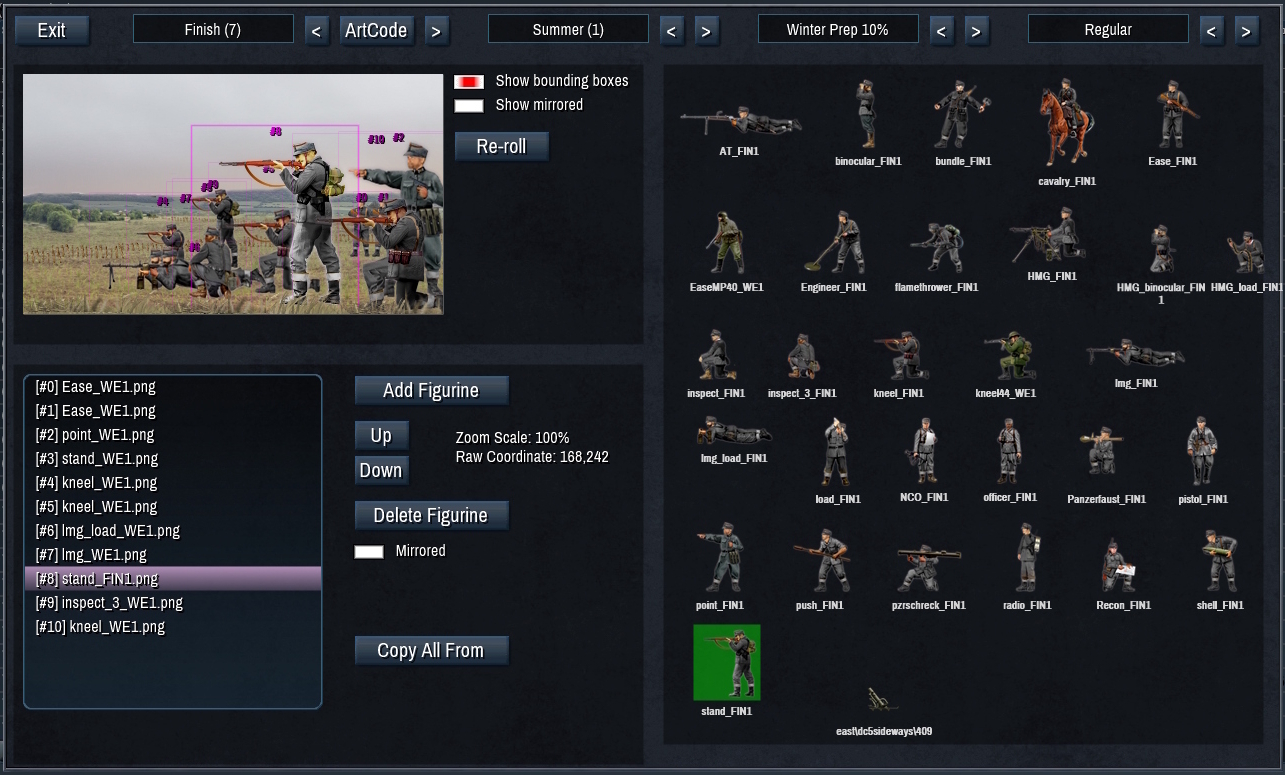
Note above that the editors ship with all the uniforms and equipment to model the Eastern Front from 1941 all the way up to 1945. We hope that we’ll see some community engagement in scenario design. The tools are ready, and so is our willingness to help out and answer questions.
So summing it up - “BETTER AI” and “PBEM++” and “EDITORS” will give you a lot of REPLAYABILITY.
We are looking forward to your feedback, upon release, and I am sure we can make even some more improvements before the Steam release, that should follow a few months later.
Let's speak to each other further on the Matrix Games forums!
Wishlist the game here.
Victor ‘Vic’ Reijkersz
Developer
VRDesigns